
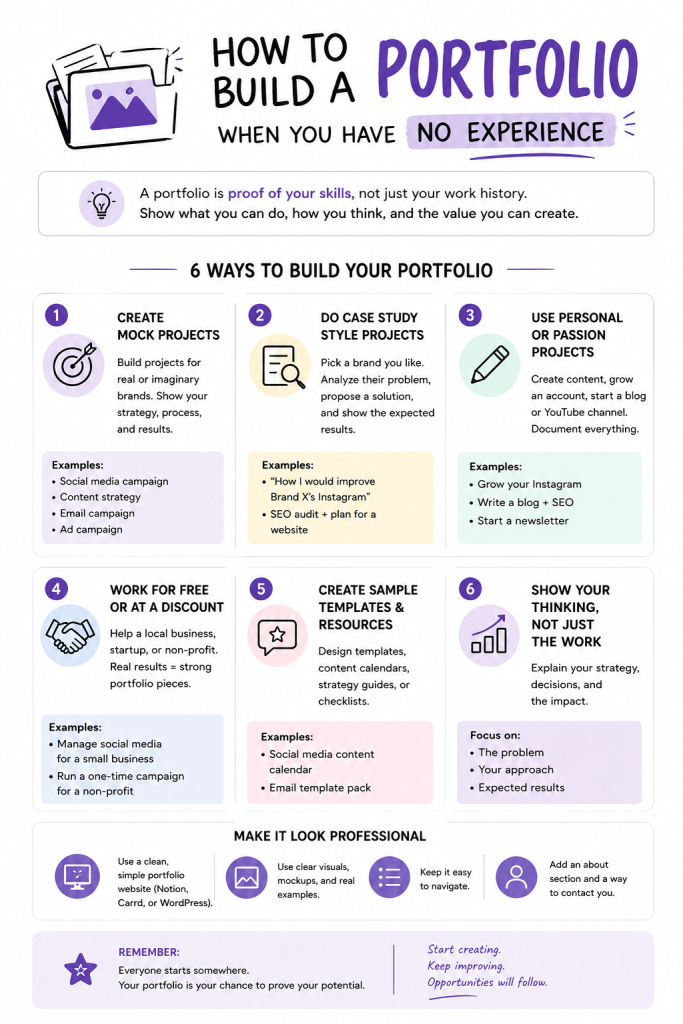
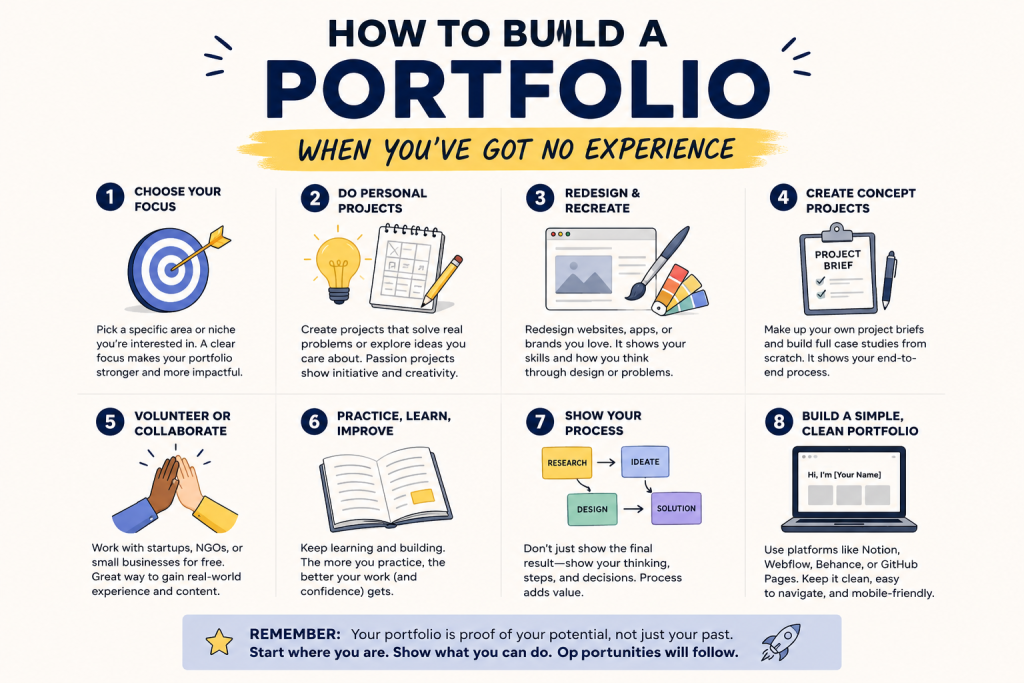
Everyone says you need experience to get opportunities. But then every chance needs experience first. That loop is frustrating students, career changers, freelancers and beginners in just about every field. Here’s the good news: A great portfolio doesn’t come from years of paid work. It is based upon a proof of skill, of initiative, of consistency. Employers and clients aren’t just after people who have worked before – they want people who can solve problems, communicate clearly, and show promise.
If you don’t have formal experience, you’re not starting from zero. You’re working from a blank slate, and that can actually be a good thing when you play it right
Understand What a Portfolio Really Is
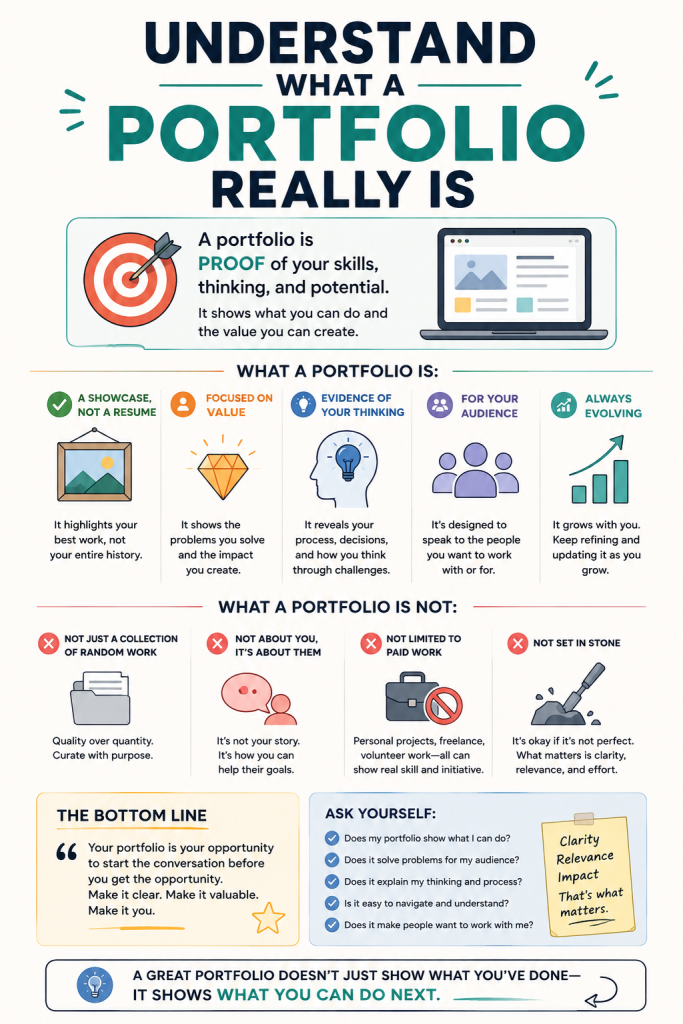
A portfolio, according to many novices, is a compilation of professional projects from prior companies. There are several versions of it.
A portfolio is merely proof of your abilities.
Your writing is displayed in your portfolio if you are a writer.
It demonstrates your design thinking if you’re a designer.
If you work as a developer, it demonstrates your aptitude for creating and resolving technical issues.
It illustrates campaigns, strategy, or analysis if you’re a marketing.
The main point is that people want to witness your abilities in action.
Self-initiated labor therefore counts.
Personal initiatives are valued.
Volunteering is important.
Practice makes perfect.
Mock projects are important.
gaining knowledge through public tallies.
Your portfolio need to convey:
- What abilities you possess
- The way you think
- How you tackle issues
- What kind of work interests you
- Whether you can finish what you start
Start With Projects You Create Yourself
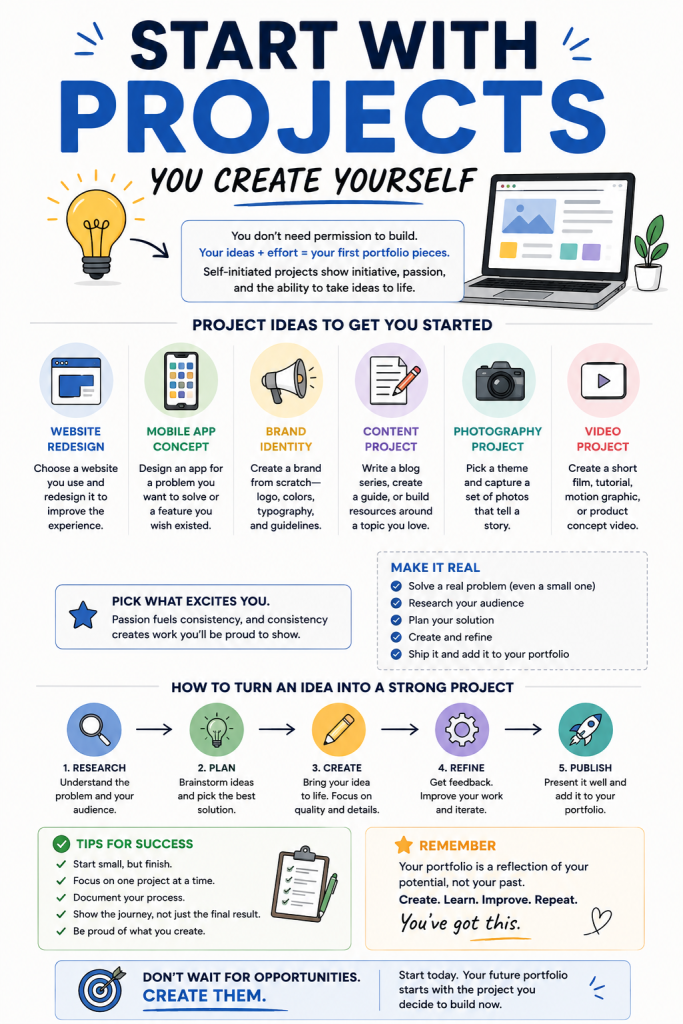
Putting an end to waiting for assignments is the quickest method to develop a portfolio.
Make your own.
Many novices overthink the procedure at this point. They believe that undertakings must be enormous, flawless, or revolutionary. They don’t.
Unfinished grandiose undertakings are less potent than well-executed simple ventures.
For instance:
- A local café’s menu can be redesigned by a novice graphic designer.
- A writer can make insightful blog entries about subjects they find interesting.
- For a hypothetical business, a web developer can create a tidy website.
- Publicly accessible datasets can be examined by a data analyst.
- With royalty-free footage, a video editor can produce cinematic edits.
- For already-existing brands, a marketer can produce imitation ads.
These initiatives demonstrate initiative. That alone sets you apart from a lot of applications.
Treating personal projects like actual work is crucial:
- Establish a goal
- Describe your procedure.
- Display the result
- Think back on what you discovered.
Employers frequently care more about how you think than the outcome.
Document Your Learning Journey

Publicly recording your progress is one of the most underappreciated strategies to establish credibility.
Pretending to be an expert is not necessary. Honesty actually increases the relatability and credibility of your work.
Distribute
- What you’re learning
- Problems you solved
- Mistakes you made
- Tools you discovered
- Before-and-after improvements
- Small wins
This can happen through
- LinkedIn posts
- Medium articles
- A personal website
- YouTube videos
- X (Twitter) threads
GitHub repositories
Build Around the Career You Want
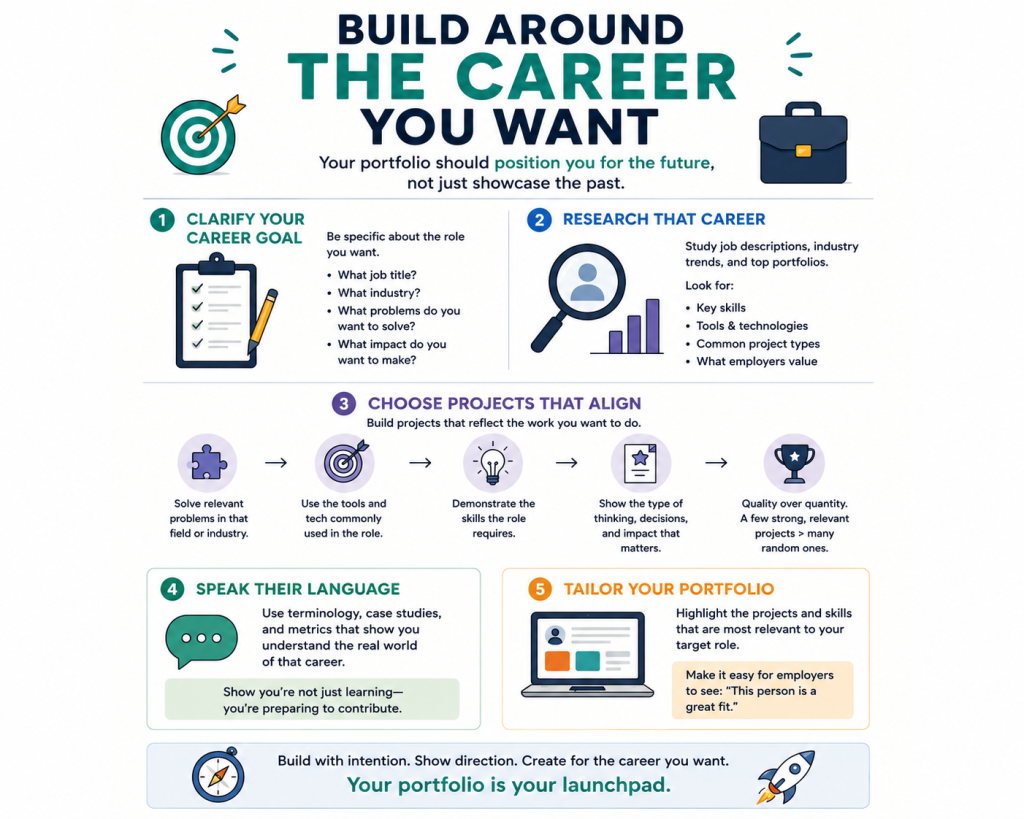
Making aimless, haphazard endeavors is a common error.
Your portfolio should reflect the kinds of opportunities you hope to pursue in the future.
For example, let us suppose you wish to become:
- Design posters for a community event
- Build a simple website for a local business
- Help a nonprofit manage social media
- Edit videos for a creator starting out
- Write articles for a small publication
The important part is not working for free forever.
The goal is to gain:
- Real-world practice
- Testimonials
- Case studies
- Confidence
- References
Your portfolio might be significantly strengthened by only one or two actual clients.
Focus on Quality Over Quantity
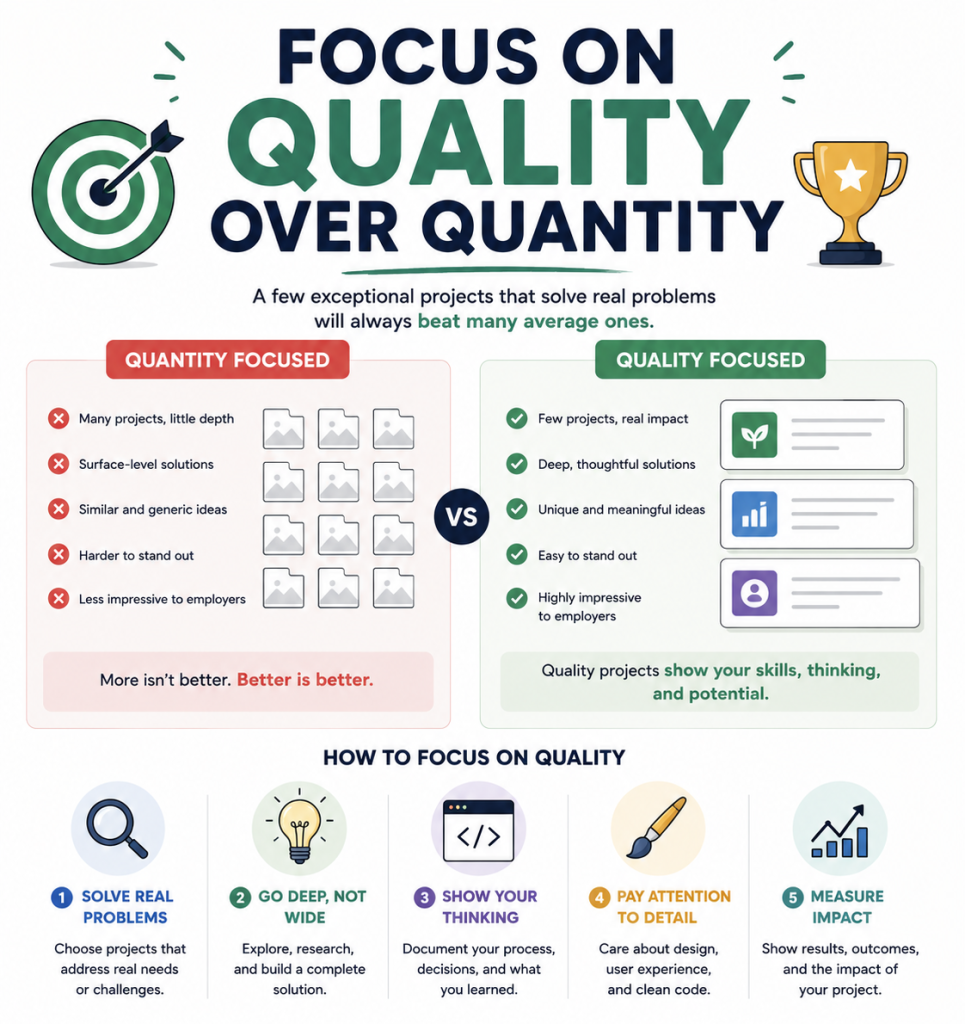
Thirty projects are not necessary.
Three excellent projects are frequently sufficient to create a positive impression.
A weak portfolio overloaded with unfinished or low-quality work can hurt more than help.
Select projects that amply illustrate:
- Skill
- Attention to detail
- Problem-solving
- Communication
- Improvement over time
For each project, include:
- Lessons learned
- The challenge
- Your approach
- The tools used
- The final result
Final thought
The truth is, nobody begins with experience. Every professional you look up to had a time when their portfolio was blank, they had no clients, no titles, no proof except the desire to get started. The difference between people who eventually succeed is not luck. It’s not perfect timing. It’s the choice to create before you are selected.
A strong portfolio is not a museum of paid work, it is evidence of curiosity, discipline and growth. The projects you make for yourself, the skills you practice consistently, and the lessons you share publicly all become proof you can learn and contribute. “Often, small projects done well speak louder than big ideas left unfinished.”
So if you are feeling behind because you don’t have the experience, remember this: experience isn’t given, it’s built. Start with what you know. Make with what you have. Keep showing up. Your portfolio is not a history of where you have been, it is a mirror of who you are becoming.